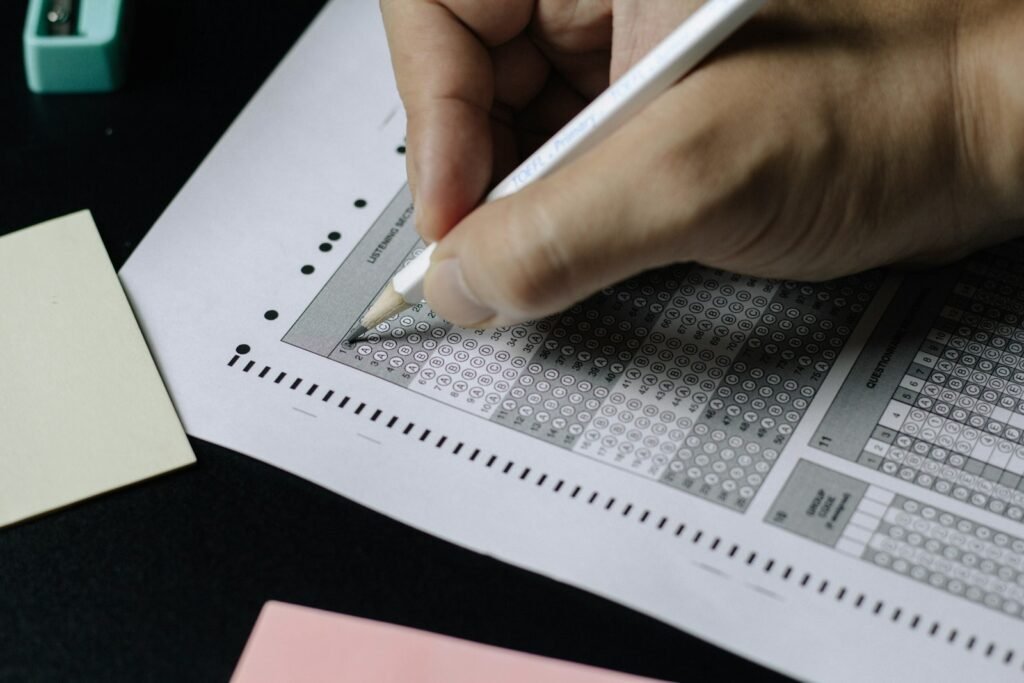
If you have decided to take a drop year for JEE 2026, the next 12 months will define the next 12 years of your career. A dropper year is not a punishment for past performance — it is a focused, high-leverage opportunity to fix what went wrong, add the missing depth, and walk into Session 1 of JEE Main 2027 with a quiet, prepared confidence. This guide gives you a month-by-month roadmap, a mock-test discipline framework, subject-priority weightage data, and a daily routine that prevents burnout. Read it once, bookmark it, and refer back every Sunday.
Why a Drop Year Works (When It Works)
Recent NTA data shows droppers consistently form a meaningful share of top-ranker pools, especially in the 99.5+ percentile band. The reason is simple: a dropper already knows the syllabus shape, the exam pressure, and — most importantly — their own weak topics. The advantage is diagnostic clarity. The risk, equally, is the slow erosion of motivation between June and December when the exam still feels far away.
Three conditions decide whether a drop year converts: a written roadmap, a non-negotiable mock-test cadence, and a sleep-protected daily routine. We will build all three below.
JEE 2026 Key Dates You Must Anchor To
JEE Main 2026 Session 1 was conducted by NTA in January 2026 (21, 22, 23, 24, 28 for Paper 1 and 29 for Paper 2A/2B). Session 2 follows in April 2026. JEE Advanced 2026 is scheduled for 17 May 2026, conducted by IIT Roorkee. Droppers preparing for the 2027 cycle should anchor backwards from an expected January-end Session 1 window and a late-May Advanced date. Mark these dates on a physical wall calendar — digital reminders get dismissed; paper does not.
Critical rule on attempts: JEE Advanced allows a maximum of two attempts in consecutive years. If you appeared in 2025 and skip 2026, your 2027 attempt will not count as consecutive. Plan your drop carefully against this rule.
The 12-Month Dropper Roadmap
Divide the year into four 90-day blocks. Each block has a different mode, a different mock cadence, and a different evaluation metric. Do not blur the boundaries.
Block 1 (Months 1–3): Foundation Repair
Goal: complete one deep pass of every chapter you were shaky on in your previous attempt. Use NCERT as the spine for Chemistry (especially Inorganic), HC Verma + DC Pandey for Physics, and Cengage or RD Sharma Objective for Mathematics. Do not start full-length mocks yet — you are not ready and a bad score now will damage morale. Instead, do chapter-level tests after every chapter: 30 questions, 45 minutes, strict timing.
Daily target: 8 hours of focused study. Use the 50/10 rhythm — 50 minutes deep work, 10 minutes off-screen rest. Sleep 7.5 hours minimum. This is non-negotiable; sleep is when memory consolidates.
Block 2 (Months 4–6): Practice Intensity
Goal: shift from “learning” to “applying.” Start two full-length mocks per week — one on Sunday, one on Wednesday — both at the actual JEE Main slot timing (9 AM to 12 PM). After every mock, spend 3 hours on analysis. The analysis matters more than the mock. Begin your error log here.
An error log is a single spreadsheet or notebook where every wrong question is recorded with: question source, chapter, type of error (silly, conceptual, time, formula, misread), the correct concept in one line, and a “next time I will” takeaway. Review the error log every Sunday before your weekly mock. Patterns will emerge — usually 4–5 chapters cause 60% of all errors. That is your real syllabus.
Block 3 (Months 7–9): Advanced Layer
Goal: add JEE Advanced-level depth on top of your Main fluency. Move to one Main mock plus one Advanced sectional per week. Solve Irodov-selected problems in Physics, OP Tandon Physical Chemistry, and Cengage Calculus. Revisit the error log weekly. By Month 9, you should be hitting a stable 220+ on Main mocks.
Block 4 (Months 10–12): Peak Mode
Goal: speed, accuracy, and exam temperament. Three full-length mocks per week, all at slot timing. Final 30 days: daily mocks. Stop learning anything new in the last 21 days — revise from your own notes and error log only. Trim sleep cautiously to 7 hours but never less.
High-Weightage Chapters You Cannot Afford to Skip
PYQ analysis of the last five JEE Main cycles points to a stable pattern. In Physics, the recurring heavy hitters are Modern Physics, Current Electricity, Electrostatics, Ray and Wave Optics, Rotational Dynamics, and Thermodynamics. Units and Measurements is consistently underestimated — it carries 1–2 easy questions every paper.
In Chemistry, Inorganic Chemistry from NCERT (Coordination Compounds, p-block, d- and f-block) is the highest-ROI cluster — fast to learn, fast to score. Physical Chemistry leans on Thermodynamics, Equilibrium, Electrochemistry, and Chemical Kinetics. Organic centres on GOC, Aldehydes-Ketones-Carboxylic Acids, and Biomolecules.
In Mathematics, Calculus and Algebra together account for over half the section. Within that, Definite Integrals, Application of Derivatives, Matrices and Determinants, Probability, 3D Geometry, and Vectors are the consistent scoring chapters. Coordinate Geometry questions are usually formula-heavy — keep a one-page summary you revisit weekly.
The Mock-Test Discipline Framework
A mock without analysis is wasted time. Follow this five-step protocol after every full-length mock:
- Score honestly. No partial credit, no “I would have got it.” Use the official NTA marking scheme.
- Tag every wrong/skipped question by error type in the error log.
- Re-solve every wrong question on paper, fresh, the next morning. Do not look at the solution first.
- Weekly pattern review. Every Sunday, look at the last 4 mocks together. Which chapter is recurring? That is next week’s revision priority.
- Track three numbers: attempt accuracy %, time per question average, and section-wise score. Plot them on a simple weekly chart.
Daily Routine That Survives 12 Months
A sample sustainable timetable: 6:30 AM wake, 7:00–9:00 AM Math (hardest subject when freshest), 9:00–9:30 AM breakfast, 9:30 AM–12:30 PM Physics with two 50/10 cycles, 12:30–1:30 PM lunch and a short walk, 1:30–4:30 PM Chemistry, 4:30–5:30 PM exercise plus tea break, 5:30–8:30 PM practice problems or sectional test, 8:30–9:30 PM dinner with family (screens off), 9:30–10:30 PM revision of the day’s mistakes, 10:30 PM lights out. Total focused hours: 9. Sleep: 8.
Weekly off: half a day — usually Sunday afternoon after the morning mock. Burnout is not avoided by working harder; it is avoided by guarding recovery windows ruthlessly. Studies on adolescent cognition show that sleep-deprived problem-solving accuracy drops 20–30% even when subjective alertness feels fine.
JEE Gurukul’s Daily Practice for Droppers
If you want the daily-MCQ discipline solved for you, JEE Gurukul delivers 50 chapter-aligned MCQs to your dashboard every morning, with explanations and a personal accuracy tracker. Pair that with our chapter-wise weightage guide and the dropper roadmap above, and you have a closed-loop system: roadmap tells you what to study, weightage tells you the priority, daily MCQs build the habit, weekly mocks validate progress.
Practice Set — 5 Mixed MCQs (Physics, Chemistry, Math)
Q1 (Physics — Modern): The threshold wavelength for photoelectric emission from a metal is 600 nm. Light of wavelength 400 nm is incident. The maximum kinetic energy of emitted electrons is approximately:
(A) 1.03 eV (B) 2.07 eV (C) 3.10 eV (D) 0.52 eV
Q2 (Physics — Electrostatics): Two point charges +q and –q are separated by distance 2a. The electric field at a point on the perpendicular bisector at distance r from the centre (r >> a) varies as:
(A) 1/r (B) 1/r² (C) 1/r³ (D) 1/r⁴
Q3 (Chemistry — Coordination): The hybridisation and geometry of [Ni(CN)₄]²⁻ is:
(A) sp³, tetrahedral (B) dsp², square planar (C) sp³d, trigonal bipyramidal (D) d²sp³, octahedral
Q4 (Chemistry — Thermodynamics): For an ideal gas undergoing isothermal reversible expansion, which is true?
(A) ΔU = 0, q = w (B) ΔU = 0, q = –w (C) ΔU > 0, q = 0 (D) ΔU < 0, w = 0
Q5 (Mathematics — Calculus): The value of ∫₀^(π/2) (sin x)/(sin x + cos x) dx is:
(A) π/2 (B) π/4 (C) π/3 (D) π/6
Answers: 1-A, 2-C, 3-B, 4-B, 5-B. For 50 such MCQs daily with worked explanations, start your free week on the JEE Gurukul dashboard.
Internal Resources
- JEE Main 2027 Syllabus and Chapter-wise Weightage
- JEE Gurukul Home — Daily MCQ Dashboard
- JEE Strategy Articles
Frequently Asked Questions
Is a drop year worth it for JEE 2026?
Yes — if you have a diagnosed reason for your previous score (lack of practice, weak fundamentals, poor exam temperament) and a written 12-month plan. A drop year without a plan tends to repeat the previous outcome.
How many hours should a JEE dropper study daily?
Eight to nine hours of focused study, structured in 50/10 cycles, is the sustainable sweet spot. Twelve-hour days are unsustainable past Month 3 and damage retention by cutting into sleep.
When should I start full-length mocks as a dropper?
Begin chapter-level tests from Month 1. Start full-length JEE Main mocks from Month 4, once you have completed one revision pass. Move to three mocks per week from Month 10.
What is the most important habit for a JEE dropper?
The error log. Every wrong question, tagged by error type, reviewed every Sunday. Toppers consistently report this as the single highest-impact habit during the drop year.
Can a dropper still qualify for JEE Advanced?
Yes. JEE Advanced allows two attempts in consecutive years. Confirm your eligibility year window carefully — a non-consecutive attempt is disqualified.