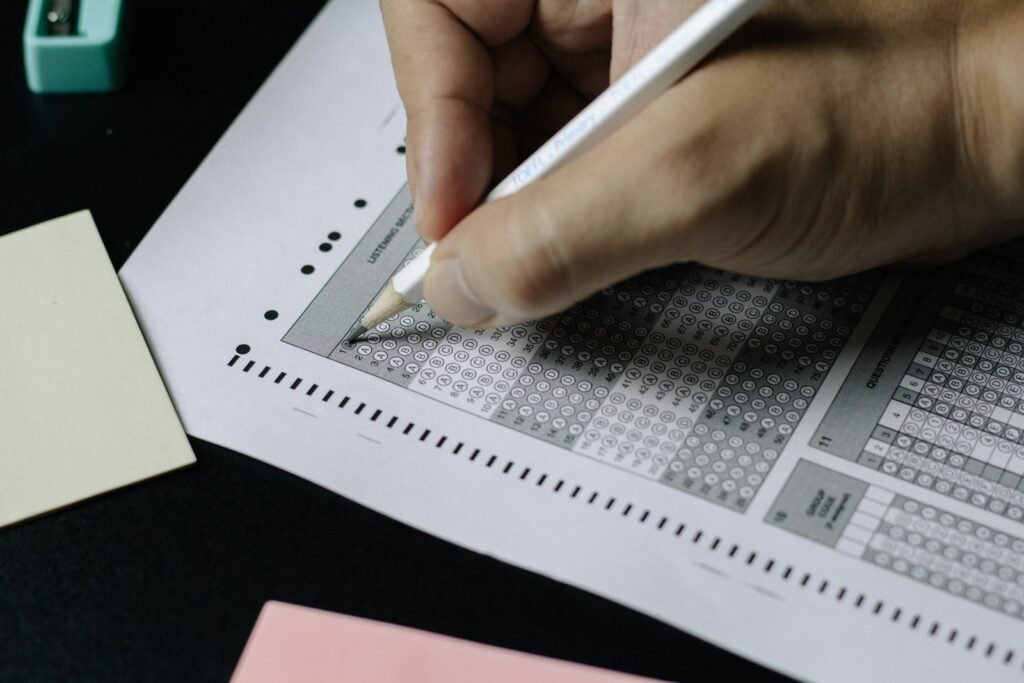
Five days. That is all the buffer that separates you from the JEE Advanced 2026 paper on Sunday, 17 May 2026. By now your formula sheets are dog-eared and your mocks have been graded. But every year, IIT Roorkee — and the seven zonal IITs before it — quietly disqualifies dozens of well-prepared candidates not because they could not solve the Mathematics paper, but because they wore a kurta with metal buttons or forgot a printed admit card. This post is the single source-of-truth for the JEE Advanced 2026 dress code, prohibited items, biometric verification process, and reporting protocol issued by IIT Roorkee. Read it once, share it with one friend, and walk into the centre without a single avoidable surprise.
JEE Advanced 2026 Exam Day at a Glance: What IIT Roorkee Has Officially Confirmed
IIT Roorkee is conducting JEE Advanced 2026 on Sunday, 17 May 2026 in Computer-Based-Test mode across more than 220 cities in India and a handful of international centres. Paper 1 runs from 09:00 AM to 12:00 PM; Paper 2 from 02:30 PM to 05:30 PM. Both papers are compulsory — missing either invalidates your candidature for the rank list, regardless of how brilliantly you performed in the one you did attempt.
Reporting time is 08:00 AM for Paper 1 and 01:30 PM for Paper 2. The gate slams shut 30 minutes before the exam begins — that is 08:30 AM and 02:00 PM respectively. No exceptions, no late entries, no “Sir, the auto broke down”. IIT Roorkee’s admit card is unambiguous: candidates who arrive after the gate-closing time will not be allowed inside under any circumstances. Pair this with biometric verification — which itself takes 8–12 minutes per candidate — and a 07:30 AM arrival is the sensible target.
For the live admit card link, exam-city slip and detailed centre map, refer to our JEE Advanced 2026 hub, which we update twice a day until the morning of 17 May.
JEE Advanced 2026 Dress Code: What IIT Roorkee Lets You Wear (and What It Doesn’t)
The dress code for JEE Advanced 2026 is built around one principle: the metal detectors at the gate should beep zero times when you walk through. Anything that could conceal a Bluetooth earpiece or store digital data is out. Anything that suggests “I am comfortable for three hours of brutal CBT” is in.
For male candidates, IIT Roorkee permits:
- Light-coloured, half-sleeve T-shirts or cotton shirts. No full sleeves. Full-sleeve clothing is treated as a concealment risk and may be asked to be rolled up for the entire three hours.
- Loose trousers, track pants, or pyjamas with minimal pockets. Pants with multiple zippered cargo pockets attract extra frisking and are best avoided.
- Open footwear — slippers, sandals, chappals or Crocs. Closed shoes are not allowed. This is non-negotiable.
- Simple analogue watches only. Digital watches, smartwatches, fitness trackers and any wrist device with a screen are prohibited.
For female candidates, IIT Roorkee permits:
- Half-sleeve kurtis, simple salwar suits, or T-shirts with leggings/track pants.
- Dupattas are best avoided. If carried, they must be plain and will be physically inspected.
- No hairpins beyond plain rubber bands. Bobby pins, metal clips and decorative bands are removed at the gate.
- Open sandals or chappals. No closed shoes, no heels, no boots.
Universally prohibited clothing items include: clothes with large or metallic buttons (kurta with brass buttons is a classic disqualifier), elaborate embroidery, badges, brooches, sequins, embellished collars, jackets, blazers, hoodies, shawls, and stoles. If your top has a hood, leave it at home — you will be asked to remove it, and re-entering means re-doing biometric.
Prohibited Items: The Full List of What Cannot Cross the Gate
The single most-cited reason for disqualification at JEE Advanced is not cheating — it is carrying a banned object into the hall by accident. Make a mental checklist of the following strictly prohibited items:
- Electronic devices: mobile phones (even switched off), smartwatches, fitness bands, Bluetooth earpieces, wireless earbuds, calculators (of any kind — scientific, graphing, or basic), iPods, MP3 players, cameras, pen drives, electronic pens, scanners, microphones, pagers, health bands.
- Metal jewellery & accessories: rings, bracelets, kadas, earrings, nose pins, chains, pendants, necklaces, mangalsutra, anklets, toe rings, badges, brooches, charm/taweez, hairpins, hair clips, belt buckles with logos.
- Stationery from outside: rough paper, notebooks, log tables, geometry boxes, slide rules, pencil cases, white-out, erasers with prints, scales, protractors. Even a printout of formulae will get you disqualified.
- Bags & pouches: handbags, backpacks, wallets, money purses, sunglasses, goggles. Centres provide no left-luggage facility; do not bring anything you cannot leave at the gate at your own risk.
- Food, except medical exception: chocolates, candies, energy bars, packed lunch — not allowed. A transparent water bottle is permitted, and that is it.
For diabetic candidates and those with documented medical conditions, IIT Roorkee allows necessary medicines and small snacks (glucose biscuits, sugar sachets) only with prior medical certification submitted to the Test Centre Administrator. Email the centre at least 48 hours before exam day — do not assume the invigilator will accept a paper at 8:25 AM. If you are a diabetic candidate, also bookmark our JEE exam-day checklist for the medical-clearance template you can hand over at the gate.
Biometric Verification & Entry Process: The 12-Minute Choreography
Once you cross the metal detector, biometric verification begins. The sequence is the same at every IIT Roorkee-managed centre:
- Admit card check. Only a printed colour copy of the JEE Advanced 2026 admit card is accepted. A PDF on your phone is not valid, and your phone is not allowed inside anyway. Print two copies on the night of 16 May — one for the morning paper, one for the afternoon. The morning admit card stays with the invigilator after Paper 1, and many centres ask for a fresh print at 01:30 PM.
- Photo-ID match. Carry the original of one of: Aadhaar, PAN, Passport, Voter ID, Driving Licence, or 12th-board school ID. Photocopies are not accepted. The name must match the admit card exactly.
- Fingerprint capture. Both index fingers are scanned. Wash your hands before reporting — oil, cream, mehendi, or sweat causes failed reads, and a failed read can mean a 5-minute delay while invigilators try alternative fingers. Mehendi-stained fingers from a wedding the previous week have caused real problems in past years.
- Live photograph. A webcam at the desk captures your face and matches it against the admit-card photograph.
- Seat allocation. Your lab and seat number are printed on the admit card. Do not change your seat under any circumstances — even if your assigned monitor has a dead pixel, raise your hand and wait. Self-relocation is treated as Unfair Means.
Inside the hall, you will receive one Scribble Pad for rough work. It must be returned to the invigilator before you leave the hall, along with your admit card. Do not tear pages, do not write your phone number, do not draw anything that is not Physics, Chemistry, or Mathematics — invigilators flag suspicious scribbles for post-exam review.
Paper 1, Paper 2 & the In-Hall Rules That Catch People Out
JEE Advanced is two papers, three hours each, both compulsory. A few in-hall rules that surprise first-timers every single year:
- You cannot leave the hall before the paper ends. Even if you have finished by 11:00 AM, you sit till 12:00 PM. There is no “early submit and walk out” provision. Bring patience and a clear head for Paper 2.
- No bathroom break in the last 30 minutes at most centres. Plan your hydration accordingly — sip, don’t chug.
- The break between Paper 1 and Paper 2 is real and you control it. You will exit the centre at 12:00 PM and must re-report by 01:30 PM. Plan a quiet lunch within 15 minutes of the centre. Do not open your phone to check WhatsApp or Twitter for the “Paper 1 answer key” leak — it will spike your anxiety just as you walk into Paper 2. Many toppers literally hand their phone to a parent for the gap.
- Scribes for PwD candidates must be requested in advance. The candidate meets the panel of scribes on Saturday 16 May 2026 in the presence of IIT representatives and the Test Centre Administrator. Scribes will be Class XI science-stream students with Mathematics. PwD candidates with an approved scribe get one hour of compensatory time per paper.
- Unfair means — including using JEE Main credentials when you have also applied directly as OCI/PIO — results in summary cancellation of candidature. Single registration, single ID, single seat.
Your 5-Day Run-Up: What to Pack on the Night of 16 May 2026
Make a physical pile on a desk on Saturday evening:
- Two printed colour copies of the JEE Advanced 2026 admit card.
- Original photo ID (Aadhaar is the safest choice) + one photocopy as backup.
- 2–3 recent passport-size photographs identical to the one on the admit card.
- A transparent ball-point pen (centres provide pens too, but carry a backup).
- A transparent 500–750 ml water bottle (label removed).
- A simple analogue wristwatch, if you want one. Skip if in doubt.
- For diabetic/medical-exception candidates: doctor’s letter, glucose biscuits in a transparent pouch, prescribed medicine in original strip.
- An auto-fare envelope: cash for transport, since wallets are not allowed inside.
Lay out your clothes too: a plain half-sleeve T-shirt, loose track pants, and open slippers. Do not, under any condition, save dress decisions for 06:00 AM on exam morning. Decision fatigue is a real opponent on 17 May; eliminate it now.
For our subject-wise 5-day revision flow, head to the JEE Advanced revision strategy guide. It pairs neatly with this checklist.
Frequently Asked Questions
Q1. Can I wear a kurta-pyjama to JEE Advanced 2026?
Yes, provided the kurta is half-sleeve, in a light colour, and has no metal buttons, embroidery, or large pockets. Plain cotton kurtas are commonly worn at North Indian centres without issue. Avoid Pathani suits with heavy embroidery or metallic threads.
Q2. I forgot to print my JEE Advanced admit card. Can I show it on my phone at the gate?
No. IIT Roorkee’s rule is unambiguous — only a physical printed colour copy is accepted, and phones are not allowed past the gate anyway. If you realise this on the morning of 17 May, find the nearest print shop or cybercafe before the gate-closing time. Many candidates print at the centre’s neighbourhood Xerox stall by 07:00 AM — do not rely on this; print on the 16th.
Q3. Are sandals with small metal buckles allowed?
Technically open footwear is permitted, but a metal buckle will trigger the detector and you will be asked to remove and inspect them. Stick to plain rubber or fabric chappals to save 60 seconds of friction at the gate. Crocs and Hawaii slippers are the safest bets.
Q4. I am a diabetic candidate. How do I carry insulin or glucose into the hall?
Email or physically deliver a medical certificate from a registered doctor to the Test Centre Administrator at least 48 hours before exam day. State the condition, the medicine/snack required, and the time it must be consumed. The centre will issue written permission. Carry both the doctor’s letter and the permission to the gate on 17 May. Do not assume verbal permission is sufficient.
Q5. What if my fingerprint is not captured because of dry skin or mehendi?
The biometric system is configured to try multiple fingers and re-attempt up to three times. If all attempts fail, the invigilator switches to facial verification using your admit-card photograph and live webcam capture. Stay calm — this happens to roughly 1 in 200 candidates and there is a documented fallback. Wash hands before reporting, avoid lotion, and reach by 07:30 AM to give yourself the buffer.
Try Yourself: 5 Quick Questions Across Physics, Chemistry & Mathematics
Five days out, a single short MCQ pulse keeps the brain warm. Five questions, mixed topics, JEE Advanced level. Answers at the bottom.
- Physics: A uniform rod of length L and mass M is pivoted at one end and released from horizontal rest. The angular velocity when it reaches the vertical position is
(A) √(g/L) (B) √(2g/L) (C) √(3g/L) (D) √(6g/L) - Physics: In Young’s double-slit experiment, when one slit is covered with a thin glass plate of refractive index 1.5, the central fringe shifts by 5 fringe-widths. The thickness of the plate, for λ = 600 nm, is
(A) 3 µm (B) 6 µm (C) 9 µm (D) 12 µm - Chemistry: The hybridisation of the central atom in XeF4 is
(A) sp3 (B) sp3d (C) sp3d2 (D) sp3d3 - Chemistry: Which of the following has the highest enol content?
(A) Acetone (B) Acetylacetone (pentane-2,4-dione) (C) Acetaldehyde (D) Cyclohexanone - Mathematics: The value of ∫0π/2 (sin x)7 dx equals
(A) 16/35 (B) 8/35 (C) 32/35 (D) 24/35
Answers: 1 → (C) [Energy conservation: ½Iω2 = Mg(L/2), with I = ML2/3, giving ω = √(3g/L)]. 2 → (B) [(µ−1)t = nλ ⇒ 0.5×t = 5×600 nm ⇒ t = 6 µm]. 3 → (C) [XeF4 is square-planar; 4 bond pairs + 2 lone pairs → sp3d2]. 4 → (B) [Intramolecular H-bonding stabilises the enol of 1,3-diketones; acetylacetone has ~80% enol]. 5 → (A) [Wallis: 6/7 · 4/5 · 2/3 = 48/105 = 16/35].
If your score was 4 or 5 out of 5, you are well-placed. If it was 2 or below, spend tomorrow on a calibrated mock — the JEE Gurukul mock test series has three full-length papers calibrated to JEE Advanced 2026 difficulty, with auto-generated diagnostic reports.
Five Days. One Paper. Zero Avoidable Surprises.
The IIT Roorkee rules are tighter than JEE Main precisely because the cost of a leaked question or a smuggled device is higher. The good news: every one of these rules is knowable, packable, and resolvable on Saturday evening. Print the admit card, lay out the half-sleeve cotton T-shirt, slip the analogue watch on a plain chappal, drink a glass of water, and sleep at 22:00 hours on 16 May. On 17 May, the only thing standing between you and your IIT seat will be Physics, Chemistry, and Mathematics — exactly as it should be.
All the best from the JEE Gurukul team. We will see you on the other side of Paper 2.